
Research
Research
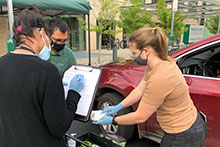
How to Increase Awareness and Uptake of Antibody Testing in Flint
A team of MSU researchers seeks answers to understand the barriers to COVID-19 antibody testing and vaccinations in Flint. A research team collects da...

MSU Study Seeks to Reduce Children’s Lead Dust Exposure
Lead exposure from contaminated water has gotten much justifiable attention lately, but another major source lurks in the dust of countless older home...

$6M CDC Grant to Boost Confidence in COVID-19 and Other Adult Vaccines
Closing the racial gap in health outcomes and COVID-19 vaccination rates in Michigan as well as other states is the aim of Michigan State University r...

Black Health Matters: Grant Funds Cancer Screening Equity
Colorectal cancer (CRC) is the third most common cancer type diagnosed in the United States in both men and women. The American Cancer Society estimat...

$622K to Address Health Disparities with Family Health History Tools
Flint native, community advocate, and Michigan State University researcher, Kent Key, PhD, MPH, has been awarded a five-year, $622,835 grant from the ...

State of Flint Kids 2021 Report Published
The second annual State of Flint Kids report, along with a special video and updated website, was released this week by the MSU-Hurley Pediatric Publi...

Cooking Classes Improve Nutrition and Emotional Health
After Flint residents were exposed to lead in their drinking water, a Michigan State University College of Human Medicine professor helped launch a se...

NIH Grant to Address Maternal Morbidity and Mortality Disparities
According to the Centers for Disease Control and Prevention, approximately 700 women die each year in the United States from pregnancy-related complic...

$1.6M to Study Pediatric Fruit and Vegetable Prescription Programs
A team of Michigan State University researchers has been awarded a three-year, $1,635,815 grant from the Eunice Kennedy Shriver National Institute of ...

How Can We Develop Resilient and Strong Cities?
What makes a mid-sized city like Flint less strong economically and less healthy from a public health perspective?
A recent study led by a Michigan S...
Addressing COVID-19 Racial Disparities in Flint with $1.2M NIH Grant
A team of Michigan State University researchers and their partners are leading a study with a pair of formidable goals: communicating effectively abou...

African Americans Outpace Whites in Opioid Overdose Death Rates
Debra Furr-Holden and colleagues are leading a study that looks at the racial differences in rates of opioid‐involved overdose deaths. Findings from t...
Page 4 of 7